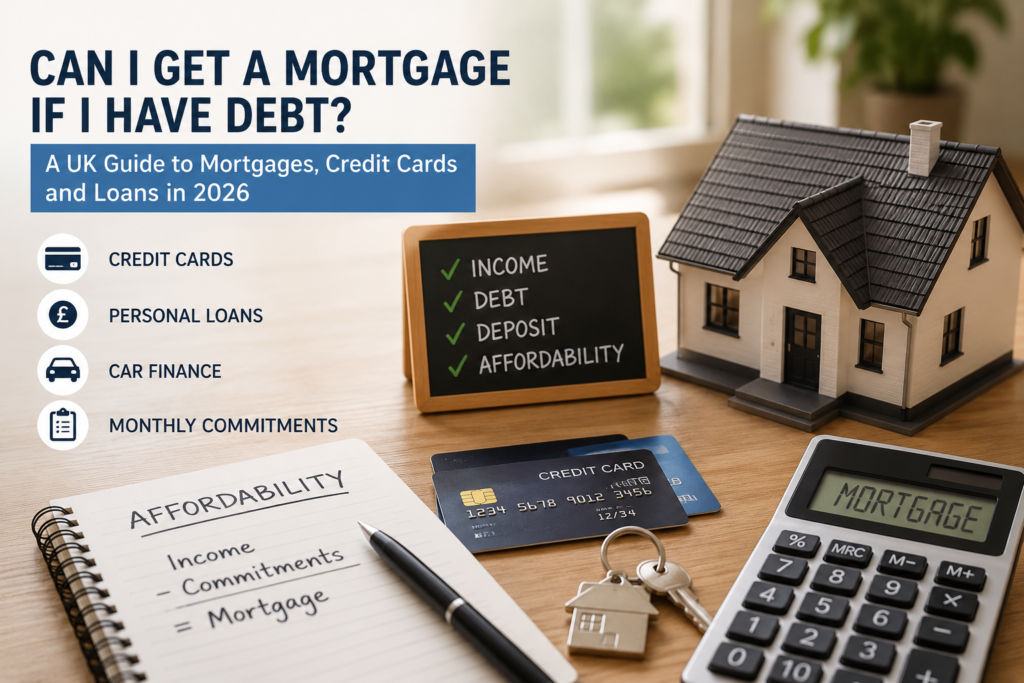
Can I Get a Mortgage If I Have Debt? A UK Guide to Mortgages, Credit Cards and Loans in 2026
Can I get a mortgage with debt? In many cases, yes. If you’ve got credit cards, personal loans, car finance or other borrowing, you may be worried it could get in the way of a mortgage. You’re not alone. For many UK borrowers, whether they’re buying their first home, moving, remortgaging or investing in a rental property, existing debt is one of the biggest worries when it comes to getting a mortgage. The good news is that having debt doesn’t automatically rule you out. What matters more is how that debt fits into your wider financial picture, since it can affect your affordability, how much you can borrow and which lenders are likely to consider your application. There isn’t one rule that applies to every borrower or every lender. The real question isn’t “do I have debt?” It’s “can I afford this mortgage alongside what I’m already paying out each month?” Can I Get a Mortgage With Debt and Still Pass Affordability Checks? When you apply for a mortgage, lenders look at your overall financial circumstances rather than just your salary. That typically includes: Your income Existing loans Credit card balances Car finance Monthly financial commitments Household expenditure Your deposit Your credit history The mortgage amount you’re requesting The property you want to buy The lender’s own affordability criteria Two people earning exactly the same salary can end up with very different borrowing capacities once all of this is taken into account. For example, imagine two people who both earn £50,000 a year. Borrower A has limited existing borrowing and around £200 a month in loan commitments. Borrower B has a credit card balance, a personal loan, £400 a month in car finance and some other regular commitments. Despite identical incomes, their mortgage affordability could look very different. This is why a simple income multiple, or an online calculator on its own, can’t tell you exactly what a lender will agree to lend. If you want to explore the figures yourself, our Mortgage, Stamp Duty and Buy-to-Let Calculators can give you an initial indication. They’re a starting point only, not a mortgage offer or a guarantee of borrowing. Can I Get a Mortgage With Credit Card Debt? Potentially, yes. Having a credit card doesn’t automatically stand in your way, though the lender is likely to factor in your outstanding balance and monthly payments when assessing affordability, alongside your income, other commitments, credit history and whether payments have been kept up to date. Someone with a modest, well managed balance is often in a very different position from someone carrying significant unsecured debt with a history of missed payments, even if the raw numbers look similar on paper. Do You Need to Clear Your Credit Cards Before Applying? Not necessarily, and it depends on your circumstances. Using savings to clear a card can reduce your monthly outgoings, but it also reduces the deposit you have available. It’s worth understanding that trade-off before making changes to your finances. Can I Get a Mortgage With a Personal Loan? Generally, yes. A personal loan won’t automatically lead to a decline, but the monthly repayment is another commitment a lender will take into account. If you’re currently paying £400 a month towards a loan, that reduces the disposable income available for a mortgage payment. The same logic applies to car finance, hire purchase, overdrafts and other regular borrowing. Different lenders weigh these differently, which is exactly why lender selection matters. Can I Get a Mortgage With Car Finance? Car finance doesn’t rule out a mortgage either, but the monthly payment is taken into account in the same way as any other commitment. A borrower paying £450 a month for their car will typically have a different affordability position from someone on the same income with no car finance at all. Should You Pay Off Your Car Finance First? Not automatically. Clearing the finance could free up some monthly income, but think about where that money is coming from, and whether using it would eat into your deposit or your emergency savings. There’s no single right answer here. Should I Pay Off My Debts Before Applying for a Mortgage? This is one of the most important questions to get right. It’s tempting to think “I’ll just use my savings to clear everything before I apply.” Sometimes that does improve your position. It isn’t automatically the right call. Say you have £30,000 in savings and £10,000 of outstanding borrowing. You could use £10,000 to clear the debt, leaving £20,000 towards your deposit. Or you could keep the full £30,000 deposit and carry on making your existing repayments. Which is better depends on your circumstances. Clearing the debt can reduce your monthly commitments and improve affordability. But a smaller deposit increases your loan-to-value, which can affect which mortgage products are available to you. It’s worth looking at the whole picture before making a decision this significant. Can I Get a Mortgage With Debt If I Have a Small Deposit? Potentially, yes, though the combination of a smaller deposit, meaningful unsecured debt, high monthly commitments and a lower income can narrow your options. That doesn’t mean a mortgage is off the table. It means lender selection and a proper affordability assessment matter more than usual. What If I Have Bad Credit and Debt? Adverse credit alongside existing debt makes things more complicated, but it doesn’t automatically rule you out. What matters is the detail: missed payments, defaults, County Court Judgments, mortgage arrears or a debt management arrangement, how long ago it happened, whether it’s been settled, and your current financial position, deposit, income and commitments. Not every lender applies the same criteria, which matters most if you’ve had financial difficulties in the past. Rather than assuming a mortgage isn’t possible, it’s worth establishing what’s realistically available before making multiple applications, since several declined applications in a short space of time can affect your credit file. Can I Get a Mortgage If I’m Self-Employed and Have Debt? Potentially, yes.