
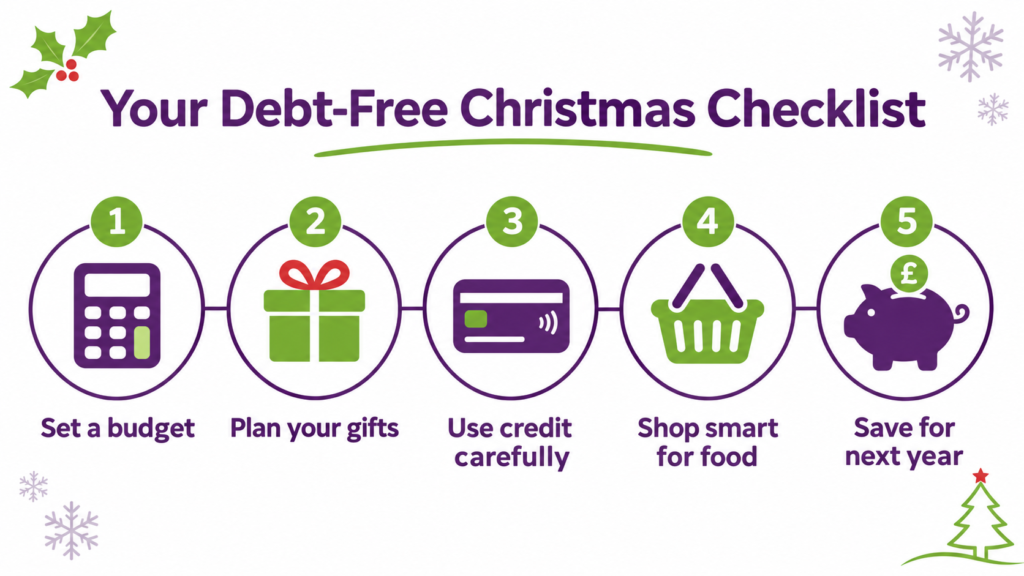
A debt-free Christmas is easier than it sounds once you know where the money goes. Christmas is a time for family, friends and celebration, but the cost of presents, food, decorations and social events can add up faster than most people expect. Without a plan, it is easy to overspend and start the New Year worrying about money.
The good news is that you do not need to spend a fortune to enjoy the festive season. With a realistic budget and a few simple habits, you can keep your finances under control, enjoy a debt-free Christmas and look forward to January with more confidence.
Thinking about your mortgage or existing debts? Email David at david@templar-mortgages.co.uk or use our contact page.
1. Set a realistic Christmas budget
Before you start shopping, work out how much you can comfortably afford to spend. Write down everything you expect to pay for:
- Presents for family and friends
- Food and drink
- Decorations and festive activities
- Travel and visiting family
- Parties and social events
- Postage, wrapping paper and other small extras
Add it up, then compare the total with what is left after your essential bills and regular commitments have been paid. Essentials such as your mortgage or rent, council tax, utilities and food always come first.
Christmas should be enjoyable, not a source of financial pressure.
2. Make a shopping list and compare prices
It is easy to overspend when you shop without a plan, especially when the shops are full of seasonal offers. Write a list of what you need and set a limit for each person before you buy anything.
A few ways to keep costs down:
- Compare prices between shops and online retailers.
- Look for genuine discounts rather than buying something just because it is on offer.
- Shop early where practical to avoid expensive last-minute purchases.
- Agree a spending limit with family and friends.
- Try a Secret Santa instead of buying for everyone.
- Consider homemade gifts or experiences instead of costly presents.
Small savings add up, and they can make a real difference by January.
3. Be careful with credit cards and Buy Now, Pay Later
Credit cards and Buy Now, Pay Later (BNPL) services can make purchases feel more affordable because you do not pay the full amount straight away. The repayments still have to be made after Christmas, and depending on the product you could face interest, fees or other consequences if you miss a payment.
Before using credit, ask yourself:
- Can I afford the repayments alongside my existing bills?
- Do I understand exactly when the money has to be repaid?
- Will I still be able to cover my essential costs?
- Am I buying something I genuinely need, or spending because of Christmas pressure?
If you cannot comfortably afford something, consider saving for it, choosing a cheaper alternative or going without this year. Try not to take on extra borrowing just to create a more expensive Christmas.
4. Save money on Christmas food
Food is another area where spending can quickly climb. Planning ahead helps you enjoy a lovely festive meal without waste.
- Plan your meals and write a shopping list before you go to the supermarket.
- Compare prices and consider supermarket own-brand products.
- Buy only the quantities you need.
- Check what you already have in the cupboards and freezer.
- Share the cost of Christmas dinner with family or friends.
- Freeze suitable leftovers safely for future meals.
You do not need to buy everything advertised as a Christmas essential. Focus on the food and traditions that matter most to you.
5. Start planning for next Christmas
The easiest way to get a debt-free Christmas next year is to start now. It may feel early, but putting a little money aside regularly makes a big difference. Once your essential bills and commitments are covered, consider setting up a separate savings pot for Christmas.
For example, saving £25 a month would give you £300 over 12 months, before any interest, to put towards presents, food and other festive costs.
Choose an amount that is realistic for you. If money is already tight, prioritise essential bills, arrears and urgent commitments before Christmas savings.
6. Already struggling with debt? Get support early
If you are already dealing with credit card balances, loans, overdrafts or missed payments, Christmas can make a difficult situation feel even more stressful. You do not have to manage it alone, and getting help early makes it easier to understand your options.
Free, impartial debt guidance is available from:
These organisations can help you understand your debts, prioritise payments and explore solutions based on your circumstances. If you are struggling to pay for essentials or keep up with your mortgage or rent, do not ignore the problem. Contact your lender or provider, or a free debt advice service, as soon as possible.
If you are also wondering how existing debts could affect a mortgage application, read our guide: Can I Get a Mortgage If I Have Debt?
7. Could a remortgage or second charge mortgage help with existing debts?
If you are a homeowner and finding your monthly debt repayments difficult, you may be wondering whether a remortgage or second charge mortgage could help. Depending on your circumstances these options may be worth exploring, but borrowing against your home to repay other debts is a significant decision and will not be right for everyone.
What is a remortgage?
A remortgage means replacing your existing mortgage with a new one, either with your current lender or a different lender. Depending on your property’s value, the amount you still owe, your income and the lender’s criteria, you may be able to borrow additional funds.
Some people consider using that extra borrowing to repay other debts. However, this increases the amount secured against your home and may mean paying interest over a much longer period. You should also allow for arrangement fees, legal and valuation costs, early repayment charges and any change to your mortgage rate.
What is a second charge mortgage?
A second charge mortgage is a separate loan secured against your property, alongside your existing mortgage. It may suit some homeowners who need to borrow more but do not want to replace their current mortgage. Whether it is appropriate depends on your circumstances, the equity in your property, affordability and the lender’s requirements.
It has its own interest rate, fees and repayment terms, and you will normally continue paying your existing mortgage as well.
Is debt consolidation the right choice?
Combining several debts into one can simplify repayments and, in some cases, reduce your monthly outgoings. There are important risks to weigh up first:
- Your home is at risk. Debts that were previously unsecured could become secured against your property.
- You could pay more overall. Spreading repayments over a longer term can increase the total interest, even if your monthly payment falls.
- There may be extra costs. Fees, charges and changes to your mortgage terms can affect whether it is good value.
- Your circumstances may change. Consider whether repayments would stay affordable if your income fell or your costs rose.
- The debt does not disappear. Consolidation changes how you repay it, and further borrowing could make things worse.
Before going ahead, compare the total cost of the new borrowing with your existing debts and consider other options, including free debt advice.
Important information: Your home may be repossessed if you do not keep up repayments on your mortgage or other borrowing secured against it. Debt consolidation may increase the total amount of interest you pay. Fees and early repayment charges may apply. Any recommendation or application will be subject to the relevant checks, eligibility requirements and lender approval.
8. Remember what Christmas is really about
It is easy to feel pressure to spend more than you can afford, particularly when adverts and social media make expensive celebrations look normal. But a memorable Christmas does not have to be an expensive one.
Time with loved ones, a homemade meal, a favourite film and simple family traditions can mean far more than costly presents. Be honest with family and friends about your budget. Most people will understand that financial security matters more than expensive gifts, and you should never feel you need to borrow to meet other people’s expectations.
Enjoy a debt-free Christmas and start the New Year with confidence
With a realistic budget, thoughtful spending and a little forward planning, you can enjoy the festive season without putting unnecessary pressure on your finances. If you are already struggling with debt, remember that help is available. Take time to understand your options and think carefully about the risks before taking on further borrowing.
Have a question? Speak to David
If you are a homeowner wondering whether a remortgage or second charge mortgage could help with existing debts, David is happy to talk through your circumstances and explain the options, with no obligation. Every situation is different, so the right approach will depend on your mortgage, debts, income and long-term plans.
Email: david@templar-mortgages.co.uk
Call: 07930 895 118
This article is for general information only and does not constitute financial or debt advice. Mortgage and secured lending options are subject to eligibility, affordability, lender criteria and applicable fees. Consider seeking independent debt advice before securing existing unsecured debts against your home. Your home may be repossessed if you do not keep up repayments on your mortgage or other borrowing secured against it.